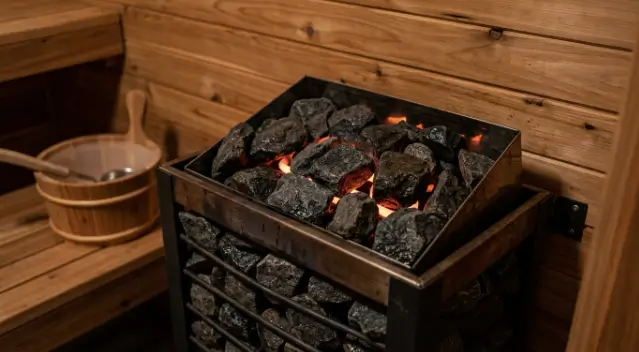
A traditional electric heater warms the air around a bed of rocks to 150 to 195 degrees Fahrenheit and lets users add steam, while an infrared panel warms the body directly at a lower ambient temperature, usually 120 to 150 degrees, with no rocks and no steam option. Traditional heaters typically need a dedicated 240-volt circuit and 30 to 45 minutes of preheat; infrared panels often run on a standard outlet and reach usable warmth in 10 to 15 minutes. Here is how the two compare across the factors that actually decide which one fits a given household.
1. Heat-Up Time
Infrared wins outright on speed. Carbon or ceramic panels start radiating usable heat almost as soon as they are switched on, and most cabins feel ready inside 10 to 15 minutes. A traditional electric heater has to bring the entire air volume of the cabin, plus a rock bed of 40 to 90 pounds, up to temperature, which realistically takes 30 to 45 minutes depending on kilowatt rating and cabin insulation. For a household that wants to decide on a sauna session with fifteen minutes’ notice, that gap matters.
2. Electrical Requirements
Most residential infrared cabins are built to run on a standard 120-volt, 20-amp household outlet, which is a meaningful advantage for anyone who does not want to pay for new electrical work. Traditional electric heaters above 6 kilowatts almost always need a dedicated 240-volt circuit, hardwired by a licensed electrician, typically adding $500 to $1,500 to the installed cost. Compact traditional heaters under 3 kilowatts sometimes run on 120 volts too, but that is a smaller, lower-heat category, not a direct substitute for a full-size rock-based unit.
3. The Steam Question
This is the clearest functional difference between the two. A traditional heater’s rock bed lets users ladle water over the hot stones for a burst of steam and humidity, which is the sensation most people associate with a “real” sauna. Infrared systems have no rocks and nowhere to pour water, so there is no steam and no humidity spike, just dry radiant warmth. Anyone who specifically wants the löyly, the steam hiss off hot rocks, needs a traditional heater. Anyone who finds high humidity uncomfortable or is sensitive to very hot air may actually prefer infrared for that reason.
4. Running Cost Per Session
Infrared panels typically draw less total power per session both because their wattage is lower and because the session itself needs less preheat time. A traditional heater in the 6 to 9 kilowatt range, run for a full 20 to 30 minute session including preheat, uses meaningfully more electricity per use than an infrared cabin running for a shorter session at lower wattage. Over months of regular use this adds up, though the gap is smaller than the upfront installation cost difference between the two systems.
5. Cabin Size and Placement
Infrared cabins are commonly sold as compact, self-contained units that fit in a spare room, garage corner, or covered porch, and their lighter electrical requirement makes placement more flexible. Traditional electric heaters work in both small and large cabins, but the fixed clearance requirements around the heater guard rail and the need for a nearby electrical panel connection narrow where the unit can realistically go, particularly in an existing structure rather than a new build.
6. Which One Should You Actually Buy?
Choose based on the sensation, not the specs. If steam, higher temperatures, and the classic hot-rock sauna experience matter, a traditional electric heater is the only option that delivers it, and the 240-volt install is a one-time cost worth planning for. If speed, lower running cost, and simpler electrical requirements matter more, an infrared panel system covers most of the wellness benefit people associate with sauna use without the wait or the wiring. Comparing both categories side by side, including what https://sweatdecks.com lists across traditional and infrared units, is a reasonable way to see real pricing before deciding which category fits the space and budget.
7. Long-Term Maintenance
Traditional heaters ask for periodic rock replacement, generally checking every few months and doing a full restack once a year, plus occasional element replacement over a decade-plus lifespan. Infrared panels have no rocks to maintain at all, since there is nothing sitting on top of the heating surface, which simplifies upkeep considerably. What infrared panels do need is periodic checking that the panel surface stays clear of dust and that the low-voltage wiring connections to each panel remain secure, since a typical cabin uses several panels wired together rather than one central heater. Neither system is high-maintenance compared with, say, a wood-fired heater that needs fuel and ash cleanup, but the specific tasks differ enough that it is worth knowing which one a household is actually signing up for before buying.
8. Resale and Long-Term Value
Traditional electric heaters from established sauna makers tend to hold their value reasonably well, since a functioning rock-based heater with clean elements is a straightforward, well-understood product for a future buyer to evaluate. Infrared panel systems are a somewhat newer category and their resale market is less established, though a well-known brand with a strong warranty history tends to hold up here too. For a household planning to sell a home with a built-in sauna at some point, a traditional heater is generally the more universally recognized feature to a broader range of buyers, while infrared may appeal more specifically to buyers already familiar with that category.
9. What Does the Research Cover?
The health research behind sauna use is drawn almost entirely from traditional Finnish-style sauna bathing, not infrared specifically. A 2018 review in Mayo Clinic Proceedings summarized cardiovascular associations linked to regular sauna use, and a broader physiological review in the American Journal of Physiology examined how the body responds to heat exposure generally, findings that likely extend at least partly to infrared given the shared mechanism of raising core body temperature, though direct infrared-specific trials remain limited. An older review in The American Journal of Medicine also outlined real contraindications worth knowing regardless of which heater type someone chooses.
Frequently Asked Questions
Is a traditional electric heater or an infrared panel cheaper to run? Infrared panels generally cost less per session, needing less power and no preheat time, versus a traditional heater’s higher wattage and 30 to 45 minute preheat.
Which heats up faster, traditional or infrared? Infrared, usually 10 to 15 minutes versus 30 to 45 minutes for a traditional rock-based heater to bring the cabin to full temperature.
Do infrared panels need a 240-volt circuit like traditional heaters? No. Most infrared cabins run on a standard 120-volt outlet, while traditional heaters above 6 kilowatts usually need a dedicated 240-volt circuit.
Can you get steam from an infrared cabin? No. Infrared systems have no rocks and no steam option. Only a traditional heater with a rock bed allows water to be added for steam.
References
- Effects of heat and cold on health, with special reference to Finnish sauna bathing, American Journal of Physiology – Regulatory, Integrative and Comparative Physiology, 2018
- Cardiovascular and Other Health Benefits of Sauna Bathing: A Review of the Evidence, Mayo Clinic Proceedings, 2018
- Benefits and risks of sauna bathing, The American Journal of Medicine, 2001
By Priya Nandan